


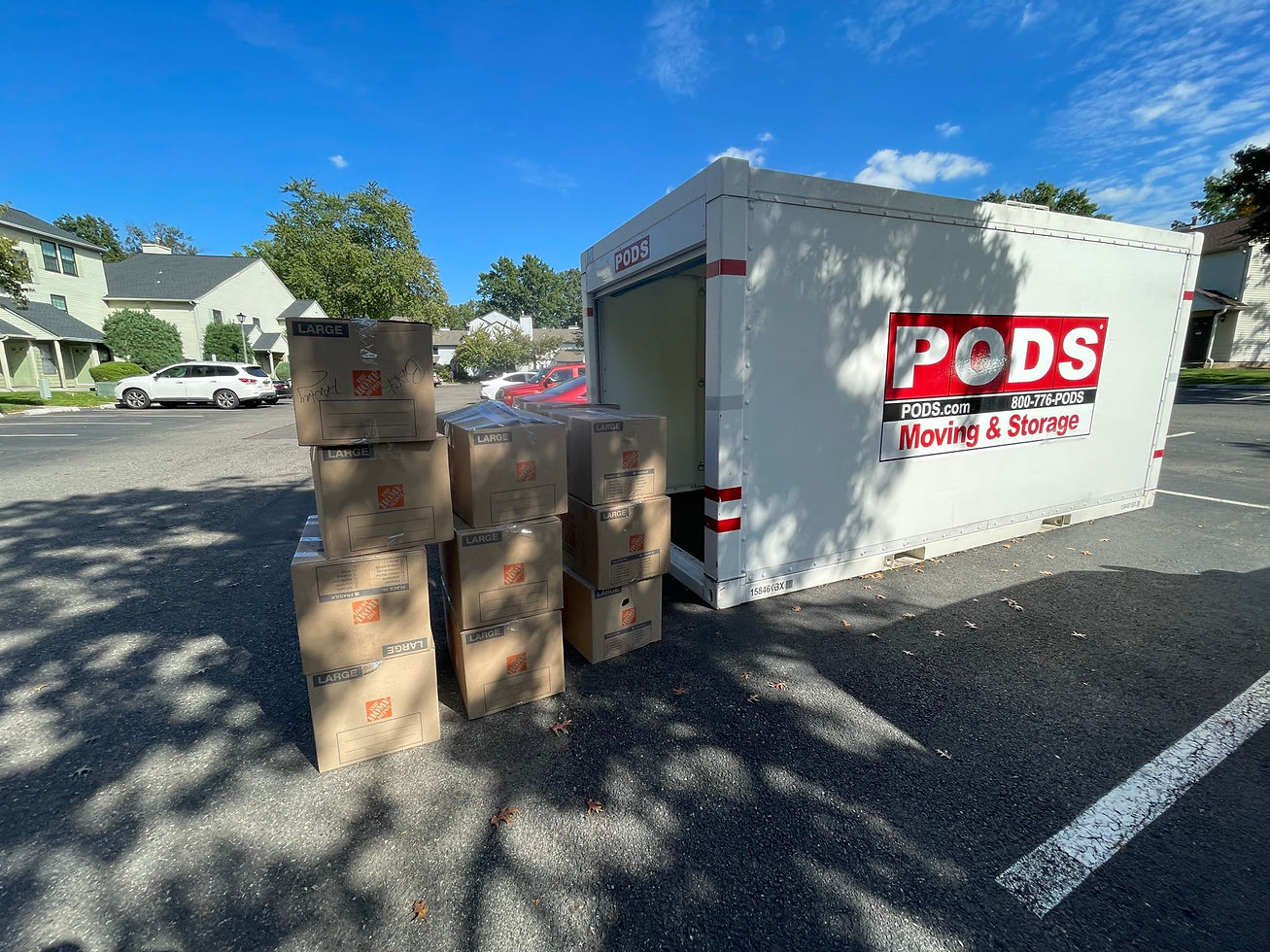
How to Efficiently Load a 16-Foot POD: A Professional Mover’s Guide

Loading a 16-foot POD or portable storage container can look fairly straightforward: pack your belongings, move them into the container, close the door, and you're done.
In practice, how you load the container matters just as much as what you put inside it.
Poor weight distribution, unused vertical space, inadequately protected furniture, and gaps between items can reduce how much fits inside the container and increase the possibility of belongings shifting during transportation.
At Assured Logistics Group, we regularly help Central New Jersey customers load PODs and other portable storage containers. Here are some of the same principles our moving team uses to make the most of the available space while protecting the customer's belongings.
1. Plan the Load Before You Start
One of the biggest mistakes when loading a POD is treating each item individually.
Before loading, take a look at everything that needs to go into the container. Identify your largest and heaviest pieces, items that can be safely stacked, fragile belongings, boxes, mattresses, and oddly shaped pieces.
The goal isn't simply to find a place for the next item. You're building the load as a whole.
A little planning at the beginning can prevent reaching the last few feet of the POD and discovering that important pieces no longer fit.
2. Load Heavy, Stable Items First
Generally, heavier furniture and boxes should form the foundation of the load, with lighter items placed above them where appropriate.
Keep weight distributed as evenly as reasonably possible throughout the container rather than concentrating everything in one area.
Dressers, sturdy tables, substantial boxes, and other stable pieces can help create the foundation around which the rest of the load is built.
Think of it almost like a three-dimensional puzzle: strong pieces create structure; smaller pieces fill the available space.
3. Use the Height of the POD
Floor space is only part of the capacity you're paying for.
A common DIY mistake is loading everything at roughly waist or shoulder height while leaving a large amount of unused space above it.
When items can be stacked safely, use the container's vertical space. Boxes of similar dimensions are particularly useful because they can create stable sections of the load.
The objective isn't to stack things as high as possible. It's to use vertical space intelligently without creating an unstable load or placing excessive weight on items that cannot support it.
4. Disassemble Furniture When It Makes Sense
Some furniture takes up considerably more space assembled than disassembled.
Removing table legs, bed frames, shelving components, or other detachable pieces can make items easier to maneuver and allow them to fit more efficiently inside the container.
Keep hardware organized and clearly labeled so everything can be reassembled later.
Not everything needs to come apart. The question is whether disassembly meaningfully improves protection, handling, or use of space.
5. Know When to Use Shrink Wrap—and When You Need Moving Blankets
Shrink wrap and moving blankets perform different jobs.
Shrink wrap can help secure drawers, doors, cushions, and protective materials around furniture. It can also help keep surfaces clean and components together.
Moving blankets provide cushioning and are generally the better choice when an item needs protection from impact, rubbing, or contact with surrounding furniture.
For sensitive items—such as televisions, glass, finished wood surfaces, mirrors, and other vulnerable pieces—additional protection may be appropriate.
On a recent 16-foot POD load in Woodbridge, NJ, for example, we primarily used shrink wrap on furniture while using moving blankets where additional protection was needed for more sensitive belongings.
6. Pack the POD Tightly—but Don't Just Cram Things In
A well-loaded container will usually have relatively little wasted space.
But tight packing and careless packing aren't the same thing.
Items should support one another where appropriate without putting damaging pressure on fragile surfaces. Smaller boxes and appropriately sized belongings can help fill otherwise unused spaces between larger pieces.
Reducing empty space also helps limit opportunities for belongings to shift while the container is transported.
7. Fill Gaps and Secure the Load as You Go
Don't wait until the POD is completely full before thinking about load stability.
As sections are completed, look for gaps and movement. Use appropriate boxes, soft goods, protective materials, or other suitable items to fill voids where doing so is safe.
Depending on the container and the nature of the load, appropriate straps or tie-down points may also be used to help secure sections.
The goal is for the load to behave as a stable unit, rather than dozens of independent objects that can move during transportation.
8. Protect TVs, Glass, Mirrors and Other Fragile Items Separately
Some belongings deserve their own loading strategy.
Televisions, mirrors, glass components, artwork, and other fragile pieces should not simply be squeezed wherever space remains.
Protect them appropriately, avoid placing unnecessary weight against them, and position them where surrounding items can provide stability without creating damaging pressure.
If an item is especially valuable or fragile, consider whether a portable storage container is the appropriate transportation method for that particular item.
9. Think About What You'll Need Before the POD Is Unloaded
Here's one that's easy to overlook.
If there are belongings you'll need before the entire container is unloaded, don't bury them at the very back.
Set aside important items before loading and determine what should remain accessible near the door.
Likewise, if you're still packing after the main furniture load is complete, intentionally leaving usable space near the front of the container for smaller remaining items can be much more useful than filling every last inch immediately.
During our recent Woodbridge POD load, we packed the primary furniture and belongings tightly while intentionally preserving accessible space for the customer's remaining smaller items.
That's not wasted space. That's planned space.
10. Don't Sacrifice Safety for One More Item
Efficiency matters, but safety comes first.
Avoid unstable stacks, overloaded boxes, unsupported heavy items, blocked access that creates unnecessary hazards, or loading arrangements that could cause belongings to fall when the container door is opened.
And remember: the person loading the POD won't necessarily be the person opening it at the destination.
A few extra minutes spent creating a stable, organized load can make both ends of the move easier.
How Much Can You Fit in a 16-Foot POD?
There's no single answer because capacity depends heavily on what you're moving and how efficiently it can be arranged.
Two households with similar amounts of furniture can use the same 16-foot container very differently depending on furniture dimensions, box sizes, disassembly, fragile items, and how effectively vertical space is used.
That's another reason professional loading can make a difference: you're not increasing the physical size of the POD—you're making better use of the space that's already there.
Can You Hire Movers Just to Load a POD?
Yes. You don't need to hire a full-service moving company to transport your belongings in order to get professional moving help.
Labor-only moving services allow you to rent a POD, portable storage container, or rental truck yourself while hiring a professional moving team specifically for the physical loading or unloading.
This can be a good option for customers who want to control their own transportation or storage arrangements but don't want to handle the heavy lifting, furniture protection, and loading themselves.
Need Help Loading a POD in Central New Jersey?
Assured Logistics Group provides labor-only POD and portable storage container loading and unloading throughout Central New Jersey.
Whether you're moving locally, placing belongings into storage, preparing for a long-distance move, or simply want experienced help making the most of your container space, our team can handle the loading while you manage the transportation.
Our goal is to do more than move belongings. We bring professionalism, care, good judgment, and a calm, reassuring helping hand to the moving experience.
Professionalism • Care • Assurance
Making Moves. Together.


Comments